Why Scouts, Agents, and Players All Have Portland at the Top of Their Lists
There's a phrase that keeps surfacing in conversations with MLS insiders: the Portland factor. Scouts use it. Agents whisper about it during contract negotiations. Players who've spent time in the Rose City reference it almost reflexively when explaining career decisions. And yet, for a market that doesn't have the population of Los Angeles or the financial muscle of New York, the fact that Portland carries this kind of weight is, frankly, remarkable.
So what exactly is the Portland factor? That's what we set out to understand.
More Than Just a Passionate Crowd
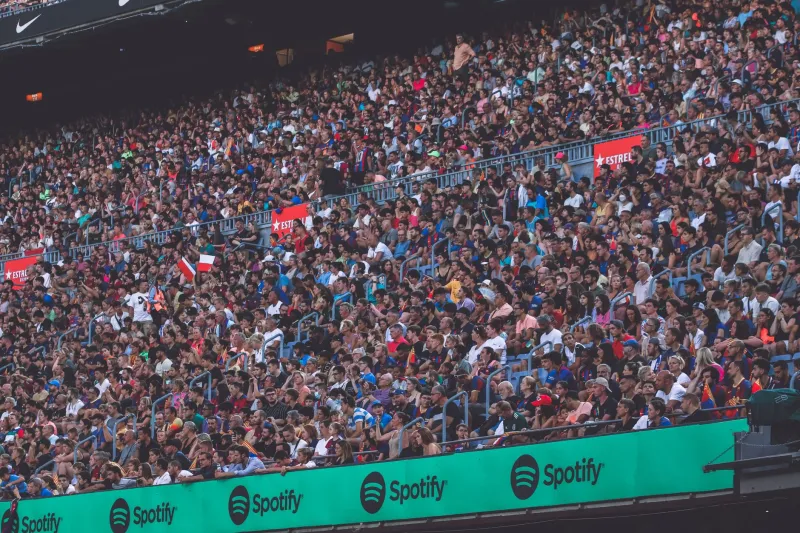
The easy answer is the Timbers Army. Forty-thousand-plus fans packed into Providence Park, the chants that rattle the rafters, the tifos that make visiting teams stop dead in their tracks — it's a spectacle unlike almost anything else in American soccer. But chalking Portland's influence up to loud supporters misses the deeper story.
Talk to scouts who've worked in MLS for a decade or more, and they'll tell you the atmosphere is just the surface layer. What's underneath is a soccer infrastructure that has been built methodically over years — a youth academy that consistently produces homegrown talent, a coaching culture that prioritizes technical development, and a community that actually understands the game at a level that most American cities still haven't reached.
"When you send a young player to Portland, you're not just sending them to play games," said one talent evaluator who has worked with multiple MLS clubs and asked to remain anonymous to protect professional relationships. "You're sending them into an environment where soccer is genuinely the fabric of everyday life. That changes how players develop. It changes what they expect of themselves."
The Recruitment Conversation Has Shifted
For a long time, the conventional wisdom in MLS went something like this: if you want to attract marquee talent, you need to be in a big market. LA, New York, Atlanta — cities where players could build a brand, do endorsements, and stay visible. Portland didn't fit that mold.
But something shifted over the last several years. Agents who negotiate MLS contracts started hearing their clients ask different questions. Not just about salary or playing time, but about environment. About community. About whether the city actually cares.
"I've had players turn down more money to go to Portland," one agent told us, speaking candidly about deals they've been involved in. "And I've had players who left Portland and immediately regretted it — not because the next club wasn't good, but because nothing else quite felt like that. The investment the fanbase makes in you as a player is real, and players feel it."
That emotional investment translates into something tangible on the recruitment side. When the Timbers are in the room pitching a player, they can make an argument that few other MLS clubs can match: you will matter here. Not just as an athlete, but as a figure in the community. In a league where most players will never be household names nationally, that kind of local significance carries serious weight.
Development From the Ground Up
The academy pipeline Portland has built deserves its own conversation. The club has consistently graduated homegrown players who go on to contribute at the first-team level — a track record that scouts from rival clubs have taken notice of.
What's interesting isn't just that Portland develops players well. It's how they develop them. The culture of the fanbase trickles down into the youth system in ways that are hard to quantify but easy to observe. Kids growing up in Portland who make it into the academy have often been attending Timbers matches since they could walk. They understand what the club means. They arrive with a sense of identity and purpose that young players in less soccer-obsessed markets sometimes have to develop artificially.
"The kids who come through the Portland system have a relationship with the club that's different," said a former MLS player who spent time in both Portland and two other league markets before retiring. "It's not just a job to them. It's home. And that mindset — that sense of belonging — it actually makes you a better player. You fight harder. You stay later. You push through things you might not push through somewhere else."
That mentality doesn't go unnoticed by rival front offices. Several MLS clubs have quietly restructured parts of their own academy programs in recent years, attempting to replicate the community-embedded identity that Portland has built organically. Whether it can be manufactured elsewhere remains an open question.
Contract Strategy in the Rose City
On the business side, Portland's standing in the league has created some interesting contract dynamics. Players who have established themselves in the Rose City often find themselves in a complicated negotiating position: they know what they have in Portland, and so do their agents. That leverage cuts both ways.
The Timbers have had to get creative in recent years to retain players who've received bigger offers from elsewhere — sometimes leaning on quality of life, community ties, and the promise of a genuine soccer culture as part of the pitch. It doesn't always work. But the fact that it works sometimes, against opponents with deeper pockets, says something about the value Portland has built as a destination.
For players on the other side of those negotiations, the calculus is genuinely difficult. More money versus more meaning. A bigger market versus a city that fills every seat and sings every song. It's not a choice most professional athletes expected to face, and Portland has made it a real dilemma.
What the Rest of the League Is Watching
MLS as a whole is in an interesting moment. Expansion has brought the league into new markets, each trying to figure out its identity. Investor groups are pouring money into infrastructure, academies, and star signings. Everyone is looking for a blueprint.
And a lot of them are looking at Portland.
Not necessarily to copy it — the Rose City's soccer culture has roots that go back decades and can't be transplanted overnight. But to understand the principles. Build something real in the community. Create an environment where players want to be. Make the club mean something beyond wins and losses.
That's the Portland factor, broken down to its core. It's not magic. It's not luck. It's years of investment in culture, in community, and in the idea that soccer can be something more than entertainment.
For the rest of MLS, figuring out how to get there is the challenge. For Portland, it's just Tuesday.
Bleed Green. Live the Game.