Portland Proved the Skeptics Wrong — Now Every Sports City Wants to Be the Next Rose City
For most of the 20th century, American cities measured their sports legitimacy in a pretty specific currency: NFL franchises, NBA championships, and Major League Baseball pennants. If you didn't have at least two of the three, you were a minor-league town in the national conversation, no matter how loud your fans screamed or how deep your local passion ran.
Portland didn't fit that mold. It still doesn't, really. No NFL team. No MLB franchise. A Blazers squad that's been in rebuild mode more often than not. By the old standards, Portland should be a footnote — a quirky Pacific Northwest city that people associate more with food carts and rain than with serious sports culture.
But somewhere between the first Timbers Army tifo unfurling over the north end of Providence Park and the club's 2015 MLS Cup run, Portland quietly broke the whole framework. And now cities from St. Louis to Las Vegas are studying the Rose City's blueprint like it's a master's thesis.
The Old Hierarchy Is Cracking
The traditional American sports hierarchy was built on scarcity and legacy. Football was king because the NFL kept its roster of cities tight, and getting a franchise felt like being admitted to an exclusive club. Basketball and baseball followed close behind. Soccer? For decades, it was the sport that American pundits confidently predicted would never really catch on — too slow, too low-scoring, too foreign.
The Timbers didn't just challenge that narrative. They torched it.
When MLS expansion was accelerating in the early 2010s, Portland wasn't supposed to be the model. It was supposed to be a test case — a mid-sized market without a legacy sports culture to anchor it. Instead, it became the proof of concept that changed the entire league's expansion strategy. Sell-out crowds from day one. One of the most recognizable supporter cultures in North American soccer. A waiting list for season tickets that stretched into the thousands.
The message was impossible to ignore: you don't need an NFL team to be a real sports city. You need the right sport, the right culture, and the right community around it.
What Other Cities Are Actually Copying
Here's where it gets interesting. When you talk to front office executives in cities like Cincinnati, Nashville, or St. Louis — all of which have leaned hard into MLS expansion over the last several years — they're not just talking about soccer as a business opportunity. They're talking about Portland as a cultural model.
What specifically? A few things come up again and again.
The supporter section as identity anchor. The Timbers Army didn't happen by accident. It was cultivated, respected, and given genuine power within the club's culture. Other cities are now deliberately building relationships with their supporter groups before the first ball is even kicked, because they've seen what happens when that foundation is there from the start.
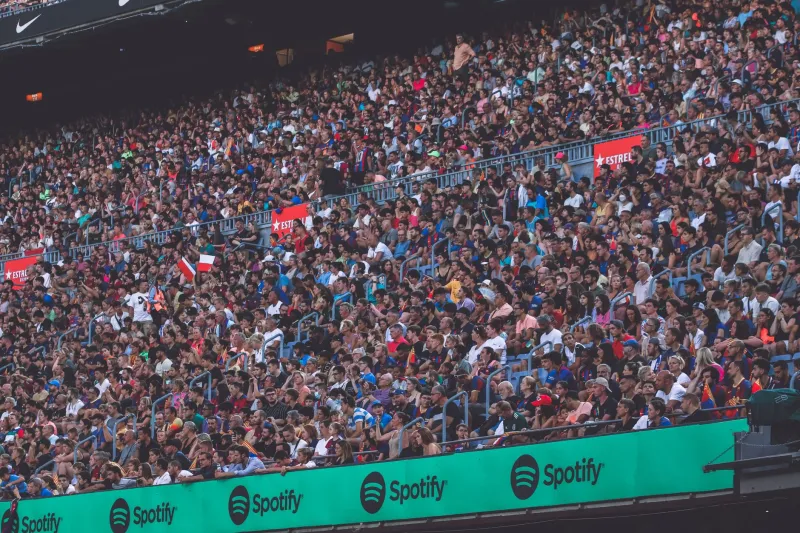
Neighborhood integration over stadium isolation. Providence Park sits in the middle of a walkable, transit-connected urban neighborhood. Fans don't just show up, watch, and leave. They spill into bars, restaurants, and streets before and after every match. That economic and cultural integration is something newer soccer cities are actively designing into their stadium plans rather than treating as an afterthought.
Local identity over corporate polish. The Timbers have always leaned into what makes Portland Portland — the weirdness, the environmentalism, the blue-collar creative class energy. It's not manufactured. It's authentic. And cities trying to replicate the model are learning that the authenticity part is actually the hardest thing to copy.
The Metrics Shift Is Real
Here's a number that should stop you in your tracks: Portland consistently ranks among the top markets in MLS for attendance percentage relative to stadium capacity. That's not a fluke of stadium size. That's sustained, genuine demand.
But beyond attendance, the shift in how cities measure their sports identity is arguably more significant. For a long time, the benchmark question was: do you have a major league team in the four traditional sports? Now, increasingly, the question is: do you have a soccer culture?
You're seeing this play out in real estate conversations, in economic development pitches, in how mayors talk about their cities to attract young talent and businesses. Having a vibrant soccer scene — and specifically, a supporter culture that looks and feels like what Portland built — has become a legitimate marker of a city's cultural vitality in a way that would have seemed laughable fifteen years ago.
Cities that don't have MLS franchises are now looking at USL expansion with the same kind of civic ambition that used to be reserved for chasing NFL teams. That's a seismic shift, and Portland is the epicenter.
The Generational Handoff
Some of this is simply demographics doing what demographics do. The millennial and Gen Z generations grew up with soccer in a way that previous American generations didn't. Youth participation in the sport has been climbing for decades. The 2026 World Cup coming to North America is going to accelerate everything.
But Portland isn't just riding that wave — it helped create it. The Timbers' success gave a generation of American soccer fans proof that the sport could hold a city's identity the same way the Cowboys hold Dallas or the Red Sox hold Boston. That psychological permission matters more than people realize.
When a kid in Columbus or Phoenix or Charlotte grows up watching their city build a soccer culture with genuine community investment, they're not settling for a consolation prize because they didn't land an NFL team. They're buying into something that feels like theirs in a way that a relocated franchise never quite can.
Bleed Green, Lead the Way
Look, we're not here to declare soccer the new king of American sports. The NFL isn't going anywhere. The NBA is still must-watch television. But the conversation about what makes a city a real sports city? That conversation has fundamentally changed, and the Timbers are a massive reason why.
Portland showed that passion, community, and identity can build something that outlasts any single season or star player. It showed that a mid-sized city without traditional sports legacy could punch so far above its weight that the entire industry had to recalibrate.
Every city with an MLS expansion dream has a Portland folder somewhere. Every front office trying to build something real is studying what the Rose City did and asking how they can get even close.
They're going to keep trying. And we're going to keep setting the standard.
Bleed green. Live the game.