Built for the Roar: How Providence Park's DNA Is Showing Up in Stadiums Across the Country
There's a moment every first-time visitor to Providence Park experiences — usually somewhere around the 12th minute when the Timbers Army erupts and the sound bounces off the upper deck like a thunderclap in a canyon. It's not something you forget. And apparently, it's not something MLS franchise owners and stadium architects forget either.
Over the last several years, a quiet but unmistakable trend has been reshaping how new soccer venues get designed across the United States. The principles baked into Portland's home ground — tight sightlines, steep rake angles, dedicated supporter sections with standing room infrastructure, and a general philosophy that atmosphere is as important as amenities — have become something of an unofficial design brief for the next generation of American soccer stadiums.
So how did a 110-year-old venue in the Pacific Northwest become the architectural conscience of a modern sports league? Pull up a chair. This one's worth breaking down.
The Intimacy Advantage
Providence Park holds roughly 25,000 fans. By American professional sports standards, that's a modest number. NFL stadiums routinely seat 70,000. Even some MLB parks dwarf it. But size, it turns out, is kind of beside the point.
What Portland's stadium does extraordinarily well is concentrate noise and energy. The stands wrap tightly around the pitch. The upper deck leans in rather than backing away. There's very little dead space where sound goes to die. When 25,000 people are fully locked in, it sounds like twice that — and that acoustic compression is something that stadium designers are now actively trying to engineer rather than leaving to chance.
Several newer MLS venues, including those that opened in the late 2010s and into the 2020s, have leaned into steeper bowl geometries specifically to replicate this effect. The goal isn't to build a smaller stadium — it's to build a louder one relative to its size. That's a shift in priorities that would have seemed strange in American sports construction even fifteen years ago. Credit where it's due: Portland helped prove the concept works.
Standing Room Isn't a Compromise — It's a Feature
For a long time, standing sections in American sports venues were viewed as a liability. Safety concerns, insurance headaches, and a general assumption that fans wanted to sit down and watch the game comfortably kept the industry from embracing what European soccer culture had long understood: standing supporters create a completely different — and often more electric — atmosphere than seated ones.
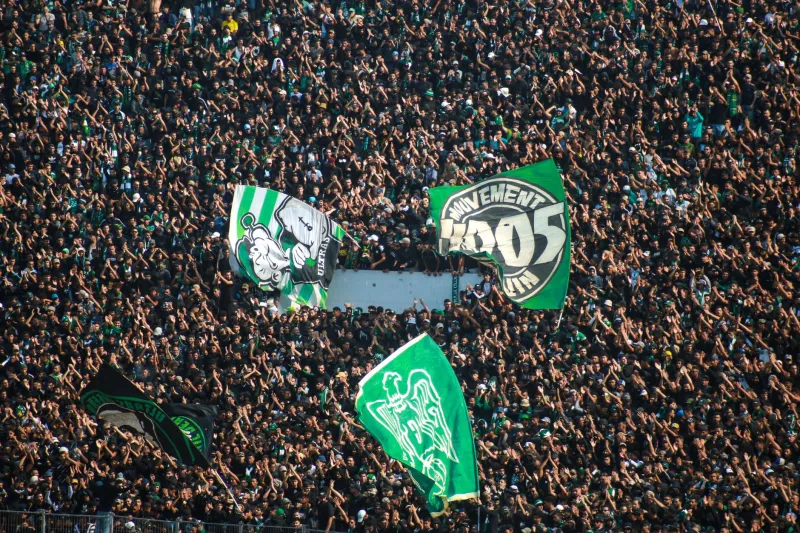
The Timbers Army's home in the south end of Providence Park helped rewrite that assumption in the American context. Here was a designated, purpose-built standing section that wasn't an afterthought or a cheap ticket option. It was the heart of the stadium's identity. The section has its own culture, its own rituals, its own visual language through tifo displays, and it functions as a kind of engine that powers the energy for the entire venue.
New MLS stadiums are now routinely including dedicated supporter sections with standing room infrastructure from the ground up — not retrofitted, not squeezed in, but actually designed into the original blueprint. Sight lines from those sections are considered carefully. Rail seating, which allows fans to stand safely and comfortably for 90 minutes, has become a standard conversation in stadium planning meetings. That's a cultural and architectural shift, and Portland's sustained success with the Timbers Army model is a big reason it happened.
Tifo Culture Demands Real Estate
Here's something that doesn't get talked about enough in the stadium design conversation: tifo displays require space. Not just vertical space for the banners themselves, but horizontal space for the groups who create and coordinate them, storage space for materials, and sightline considerations so that a massive visual display actually reads correctly from across the stadium.
Providence Park, through years of working alongside the Timbers Army, has evolved to accommodate this. And newer venues are learning from that experience before the first shovel hits the ground. Supporter group representatives are increasingly being included in design consultations — something that would have been almost unheard of in American sports venue planning a generation ago.
The result is stadiums where the supporter culture feels integrated rather than tolerated. That's a meaningful distinction. When a venue is designed around the assumption that passionate, organized fan groups will be a permanent and celebrated part of the experience, it shows in everything from entry gate placement to concourse flow to the acoustics of the supporter section itself.
The Neighborhood Factor
Providence Park doesn't sit in a parking lot wasteland. It's embedded in the Goose Hollow neighborhood, surrounded by bars, restaurants, and the kind of pre- and post-game street life that makes a match feel like a civic event rather than just a sports outing. Fans walk. They gather on sidewalks. The stadium's exterior is part of the neighborhood's texture.
This urban integration model has become increasingly aspirational for MLS ownership groups, many of whom are choosing urban or near-urban sites over suburban greenfield locations specifically to cultivate this kind of matchday ecosystem. The economic development arguments are part of it, sure. But there's also a genuine understanding that the feeling of a Portland Timbers match day — that sense of a whole city turning green — is inseparable from where and how the stadium sits in its community.
Several recently opened and under-construction MLS venues have made urban adjacency a central feature of their site selection, and the fan experience logic driving that decision traces back, at least in part, to what Portland built.
Not Everything Translates — And That's Okay
It's worth being honest here: you can't just copy Providence Park and expect the same result. The Timbers Army didn't appear because the stadium was designed a certain way. The stadium evolved with the supporter culture over decades. That relationship between place and people is genuinely hard to manufacture from scratch.
What newer franchises can do — and what the smart ones are doing — is design spaces that give supporter culture room to grow. Lower barriers. Create infrastructure that assumes fans will want to stand, sing, and display. Build acoustics that reward noise rather than absorbing it. Make the stadium feel like it belongs to the city, not just to the ownership group.
That's the real lesson from Providence Park. It's not a template. It's a philosophy.
Portland's Lasting Imprint
The Timbers have won a championship. They've developed players. They've built one of the most recognizable supporter cultures in American sports. But maybe the most quietly significant thing the club has done is shift the entire conversation about what a soccer stadium in this country is supposed to feel like.
Next time you're watching a match in a new MLS venue — wherever it is — and you feel that roar compress around you, notice how the supporter section sits in the bowl, watch a tifo unfurl with room to breathe. There's a good chance Portland had something to do with that.
Bleed green, indeed.