Cascadia vs. Everything Else: Why No MLS Rivalry Even Comes Close to Portland-Seattle
Let's get one thing straight before we dive in: there are good rivalries in MLS, and then there's Portland versus Seattle. Lumping them together is like comparing a campfire to a volcano. Both produce heat. Only one reshapes the landscape.
Every major American sports league has its marquee feuds. Yankees-Red Sox. Bears-Packers. Lakers-Celtics. These are rivalries forged over decades, built on geography, history, and genuine mutual contempt. MLS is still relatively young by those standards, but the Timbers-Sounders matchup has managed to compress generations of bad blood into a remarkably short window — and the result is something that feels less like a soccer game and more like a civic event.
So what makes it tick? And how does it stack up against the rest of the MLS rivalry landscape?
A Geography Lesson That Explains Everything
Portland and Seattle are 174 miles apart. That's close enough that both fan bases regularly make the road trip. Close enough that coworkers, neighbors, and family members end up on opposite sides of the fixture. That kind of proximity is rivalry gold, and it's something you can't manufacture.
Compare that to other MLS derbies. The Hudson River Derby between NYCFC and the Red Bulls has geographic closeness but lacks a cohesive identity — New York is too big and too diffuse for either club to claim full ownership of the market. The El Tráfico matchup between the LA Galaxy and LAFC generates genuine heat, but it's still relatively new, and the Los Angeles market has historically been indifferent to soccer in ways Portland never was.
The Cascadia Clásico, by contrast, exists within a region that has built a genuine shared identity — and then violently divided itself over which city gets to claim superiority within it.
The Fan Culture Angle: This Is Where It Gets Real
Talk to longtime supporters from both sides and you'll hear a consistent theme: this rivalry is personal in a way that transcends sports.
"I have friends who are Sounders fans," admits long-time Timbers Army member Dana Kowalski, who has attended over 60 Timbers home matches. "Good people. But on matchday? I genuinely cannot stand them. That's not something I feel about any other opponent. It's a different gear entirely."
Seattle supporters say the same thing, just with different green-and-blue energy. "The Timbers games are the ones we circle in January," says Marcus Reinholt, a Sounders supporter who's made the Portland road trip four times. "Everything else is a game. This is an event."
That intensity shows up in the atmosphere at Providence Park in ways that are almost hard to describe if you haven't experienced it. The Timbers Army — already one of the loudest, most organized supporter groups in MLS — operates at a completely different level when Seattle comes to town. The tifos get bigger. The chants get sharper. The noise gets louder. And the visitors' section, packed with traveling Sounders faithful, gives it right back.
It's the kind of stadium environment that casual American sports fans don't expect from soccer. It's the kind that converts skeptics on the spot.
How It Compares to the Rest of MLS
MLS has worked hard to cultivate rivalry culture as the league has expanded. The Cascadia Cup — the unofficial three-way trophy competed for by Portland, Seattle, and Vancouver — predates MLS expansion and gives the regional rivalry a tangible, organic structure that most league-manufactured derbies lack.
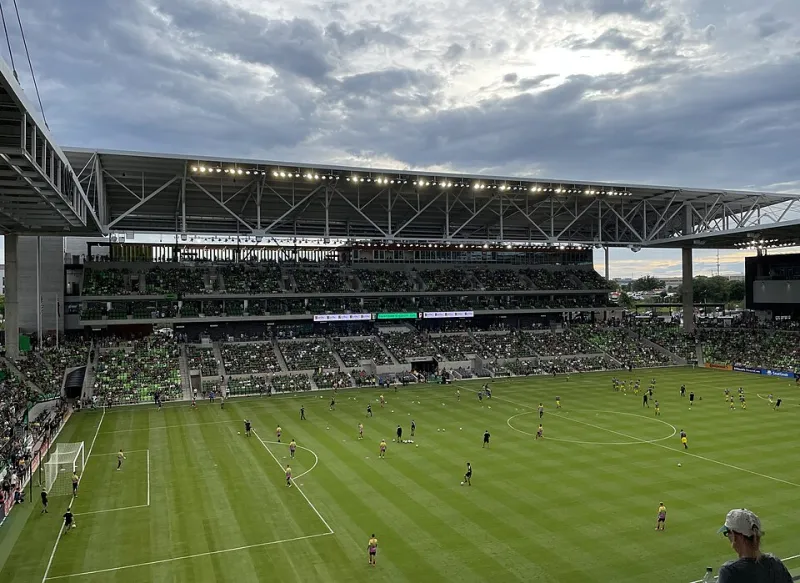
The Atlanta-Charlotte rivalry is growing with genuine regional pride behind it. The Austin-Houston Dynamo matchup has Texas bragging rights on the line. These are real, developing feuds worth watching. But they're still in their early chapters.
The Timbers-Sounders story, by comparison, has history. It has playoff drama. It has moments — specific, seared-into-memory moments — that supporters from both sides can recall with the kind of detail usually reserved for personal milestones. The 2014 Western Conference Semifinals. The heated regular season clashes that swung Supporters' Shield races. The matches that felt like they had stakes well beyond three points.
"You can't fake that history," says one MLS analyst who covers the Western Conference. "Other rivalries are being built. This one already exists. That's a meaningful distinction."
Beyond Soccer: What This Rivalry Says About the Pacific Northwest
There's a cultural dimension here that goes deeper than sport. Portland and Seattle have long had a friendly-but-pointed rivalry over which city is the authentic version of Pacific Northwest cool. Both are progressive, outdoorsy, tech-adjacent cities with strong coffee cultures and even stronger opinions about themselves. The soccer rivalry has become the sporting expression of something that was already simmering.
"It's like the rivalry gives people permission to say out loud what they already felt," says Kowalski. "Portland is better. Obviously. But now we get to prove it twice a year on a field."
Seattle fans, naturally, have a different take on who's proving what.
That good-natured-but-absolutely-serious edge is part of what makes this matchup so watchable even for neutral observers. There's real wit in the banter. Real creativity in the supporter sections. Real stakes attached to the result. It's a rivalry that's fun to be inside and fun to watch from the outside.
What's Next for the Cascadia Clásico
As MLS continues expanding and new rivalries take shape across the country, the question becomes whether Portland-Seattle can maintain its position at the top of the league's rivalry hierarchy. The honest answer is yes — because the foundation isn't just marketing or proximity. It's genuine, earned animosity between two fan bases that have grown up alongside each other and chosen, enthusiastically, to be enemies.
New Timbers signings will create new storylines. Seattle will add pieces of their own. Playoff collisions will happen. And every time these two clubs meet, Providence Park or Lumen Field will transform into something that reminds you why you fell in love with this sport in the first place.
Other MLS rivalries are coming for the crown. They're going to need more than geography and a marketing push to get there.
For now, this one still reigns. And Timbers fans wouldn't have it any other way.