Can Lightning Strike Twice? What New MLS Cities Are Trying to Steal from Portland's Playbook
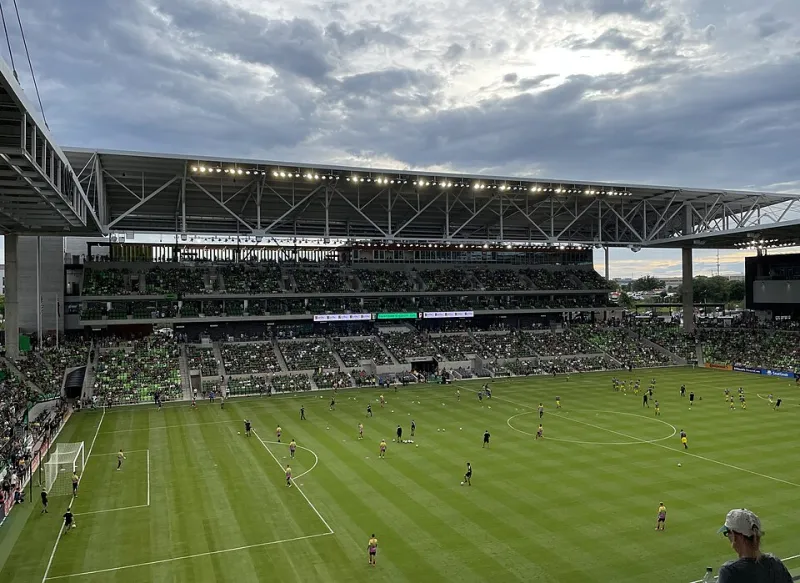
Photo: Daniel Ziegler, CC BY-SA 4.0, via Wikimedia Commons
Every few years, a new MLS franchise announces itself to the world with a splashy press conference, a badge reveal, and a whole lot of promises about community and culture. And almost every time, somewhere in that presentation, someone mentions Portland.
It's become a kind of shorthand in American soccer circles. "We want to be the next Portland." It's said so often that it's almost lost meaning — which is a shame, because what Portland actually built deserves more than a talking point.
So let's get into it. What did Portland actually do? What are newer markets borrowing from the PTFC model? And — here's the honest question — does any of it actually translate?
The Foundation: A Stadium That Breathes
Start with Providence Park, because you have to. The stadium is genuinely unusual in the American sports landscape. It's old, intimate, loud, and sits inside a real neighborhood rather than a parking-lot wasteland on the edge of town. When you're inside it during a match, you feel the city pressing in from all sides.
That's not something you can manufacture. And yet newer MLS markets keep trying — and occasionally succeeding — by prioritizing downtown or urban-adjacent stadium sites over the suburban mega-complex model that dominated American sports construction for decades. St. Louis City SC opened their stadium in a walkable urban corridor. Nashville SC built inside the city. These aren't accidents. They're teams that looked at what makes Providence Park special and asked their architects to aim in the same direction.
The lesson isn't "build an old stadium." It's "build somewhere people actually live."
The Supporter Group Question
Here's where the Portland story gets genuinely hard to replicate. The Timbers Army didn't spring into existence when MLS arrived in 2011. It had been building since the lower-division days, through years of scrappy soccer in a league that most of the country wasn't paying attention to. By the time Portland got their top-flight franchise, there was already a culture waiting to receive it.
New expansion cities don't have that runway. They're starting from scratch, often trying to cultivate supporter group energy in markets where soccer fandom has no real roots. Some have done it thoughtfully — seeding early supporter sections, giving organized fan groups real access and ownership over their matchday experience, keeping ticket prices in the North End or equivalent sections accessible to younger, more passionate fans who'll actually generate atmosphere.
St. Louis is probably the best recent example of a city that had genuine pre-existing soccer culture (thanks to decades of strong youth and amateur soccer infrastructure) that could be channeled into MLS-level support. It's not Portland, but it rhymes.
San Diego FC, set to kick off in 2025, is another one to watch. The border city has deep soccer roots and a fanbase that's been hungry for a top-flight club for years. The bones are there. Whether the organization nurtures them correctly is the variable.
Local Identity Over Generic Branding
One of the quieter things Portland got right was resisting the urge to be everything to everyone. The Timbers are of Portland in a way that feels specific and earned. The logging imagery, the Rose City references, the connection to Pacific Northwest culture — it all coheres into something that feels like it couldn't exist anywhere else.
Compare that to some expansion franchises that feel like they were designed by committee, with names and crests that could belong to any city in the country. Fans aren't stupid. They can tell when a brand is genuinely rooted in place versus when it was market-tested into blandness.
The clubs that are getting this right — St. Louis with its gateway arch iconography, Austin FC leaning hard into Texas identity, Sacramento Republic building on deep community ties — have figured out that specificity is an asset, not a liability.
Ownership That Acts Like It Gives a Damn
This one's uncomfortable to talk about because it's the hardest to control as a fan. But Portland's ownership history — for all its complications — has generally included people who treated the club as a civic institution rather than a pure financial instrument. That orientation shapes everything from stadium investment to community programming to how the front office talks about the team in public.
New MLS owners who show up primarily to flip the asset in ten years tend to produce clubs that feel hollow. The fans can sense it. The investment in supporter culture, in youth academies, in local partnerships — all of it reflects whether ownership sees the club as something they're building or something they're managing.
The Honest Answer
Can you replicate Portland? Not exactly, no. The specific combination of pre-existing soccer culture, urban stadium geography, organic supporter group development, and civic identity that came together in Rose City was genuinely rare. Trying to copy it wholesale is like trying to recreate a great restaurant by only reading the menu.
But can you learn from it? Absolutely. The principles underneath Portland's success — prioritize atmosphere, empower supporters, root the club in genuine local identity, build where people live — are transferable. They require patience, humility, and ownership willing to play a long game.
The expansion cities that succeed won't be the ones that say "we want to be the next Portland." They'll be the ones that figure out how to be the first version of themselves.
And maybe, twenty years from now, some new MLS franchise in a city we haven't thought of yet will be the one everyone's trying to copy.
But for now? Portland's still setting the standard. Bleed green.