Why Every MLS Front Office Has a Portland Folder on Their Desktop
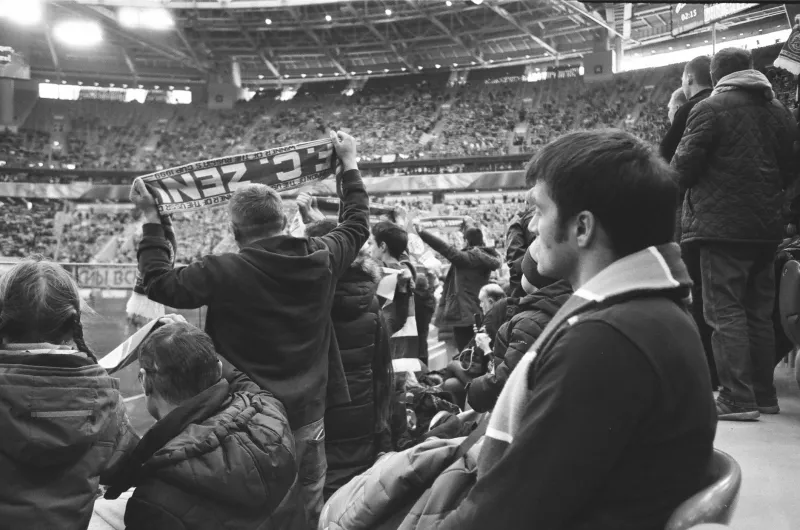
There's a running joke in MLS front office circles that goes something like this: whenever a new expansion team holds its first staff retreat, someone inevitably pulls up footage of the Timbers Army and says, "We want that." Then everyone nods, scribbles some notes, and three years later they're still trying to figure out why their supporter section sounds like a library compared to Section 107 on a rainy Tuesday night in Portland.
It's funny because it's true. And it points to something that goes way deeper than drum cadences and tifo budgets.
The Quiet Obsession Happening League-Wide
Talk to enough people who've moved through MLS organizations over the past decade and a pattern emerges fast. Portland isn't just respected around the league — it's studied. Formally. Obsessively. Former Timbers front office personnel who've landed in cities like St. Louis, Nashville, and Austin describe walking into their new roles and finding that their Portland experience was treated almost like a credential in itself.
"There were moments in my first weeks at my new club where I felt like I was being debriefed," said one former Timbers operations staffer who asked not to be named because they still work in the league. "They wanted to know how we handled supporter group relationships, how we structured community outreach, even how we communicated internally around game-day logistics. It wasn't casual curiosity. They had specific questions."
That kind of institutional curiosity reflects just how much Portland has separated itself from the pack — not just in trophies, though two MLS Cup titles and consistent playoff appearances don't hurt — but in the harder-to-quantify stuff. Atmosphere. Identity. The feeling that something genuinely meaningful is happening at Providence Park on match day.
What the Blueprint Actually Looks Like
So what exactly are these front offices trying to reverse-engineer? Experts and insiders point to a few interconnected pillars that, together, create something that's genuinely hard to replicate in isolation.
The supporter relationship isn't transactional. This one sounds obvious, but it's rarer than you'd think. The Timbers Army has operated as a genuine stakeholder in the club's identity for years — not just a marketing asset to be photographed and thanked in press releases. That relationship was built incrementally, through conflict and compromise, and it shows. When the organization has stumbled, the Army has pushed back. When it's gotten things right, the energy in that stadium is unlike anything else in American soccer.
"You can't manufacture that trust overnight," said a supporter culture analyst who consults with multiple MLS clubs. "Other teams see the result — the noise, the tifos, the full sections — and they try to copy the output without understanding the input. The input is years of treating your supporters like adults."
Local identity is baked in, not bolted on. Portland didn't adopt soccer culture. It absorbed it into a civic identity that was already weird, proud, and fiercely independent. The Timbers leaned into that rather than trying to sand it down into something more broadly marketable. The green kit, the axe, the lumber, the Pacific Northwest references — none of it feels like a branding consultant's mood board. It feels like the city itself.
Expansion clubs in newer markets often struggle here because they're trying to build identity from scratch in places that haven't had decades to develop a soccer-specific culture. Nashville SC has done admirable work. St. Louis City SC has tapped into something real with its working-class soccer heritage. But the runway Portland had — and the organic, sometimes contentious process by which the current culture was forged — isn't something you can shortcut.
The front office actually watches soccer. This one gets mentioned more than you might expect by people who've worked in multiple MLS markets. Portland's technical staff has historically been populated by people who understand the game at a deep level and are empowered to make decisions based on that understanding rather than spreadsheet outputs alone. That doesn't mean analytics get ignored — far from it — but there's a coherence to the sporting vision that comes from genuine soccer intelligence at the top.
Where the Copies Fall Short
For all the studying, the honest answer from most insiders is that full replication hasn't happened yet. A few reasons keep coming up.
First, geography and demographics matter enormously. Portland is a mid-sized market with a highly educated, culturally progressive population that was already primed for the kind of communal, identity-driven fandom that soccer demands. Drop the exact same organizational structure into a sprawling Sun Belt market with a fractured sports landscape and the results will differ — not because the people there care less, but because the conditions are fundamentally different.
Second, patience is genuinely rare in professional sports. The Portland model wasn't built in a season or two. It was built through years of sometimes uncomfortable decisions — keeping ticket prices accessible, investing in community programs that don't have obvious ROI, letting supporter groups operate with real autonomy even when that autonomy occasionally caused headaches. Ownership groups that are already under pressure to show returns on nine-figure investments don't always have the stomach for that timeline.
"The thing about Portland that nobody wants to hear," said one former Timbers staffer now working with another MLS club, "is that a lot of what makes it work isn't scalable. It's specific to that place and those people and that history. You can learn from it. You can apply principles. But you can't just download it."
What Other Clubs Can Actually Take Away
None of that means the exercise is pointless. There are genuine lessons that travel, even if the full package doesn't.
The emphasis on authentic community connection — not sponsored community events, but real investment in the neighborhoods around the stadium — is replicable. So is the organizational commitment to treating supporter culture as a partnership rather than a product. The willingness to build a coherent sporting identity and stick to it through rough patches, rather than panicking and pivoting every time results dip, is something any club can choose.
And maybe most importantly: the belief that soccer culture in America doesn't need to apologize for itself or dilute itself to attract casual fans. Portland proved that if you build something with genuine soul, the casual fans come anyway. They come because everyone wants to be part of something that actually means something.
The Folder Stays Open
Back in those front offices across the league, the Portland folder isn't going anywhere. If anything, it keeps getting thicker. Every playoff run, every sold-out Providence Park, every tifo that goes viral adds more material to study.
The Rose City probably doesn't mind. There's a certain quiet confidence that comes with being the standard everyone else is measuring themselves against. And for those of us who bleed green — who've been in those stands, felt that energy, watched this thing grow into something genuinely special — it's a reminder that what we have here isn't just a soccer team.
It's a model. And apparently, the whole league knows it.