Before the Big Stage: The Everyday Believers Who Planted Portland's Soccer Roots
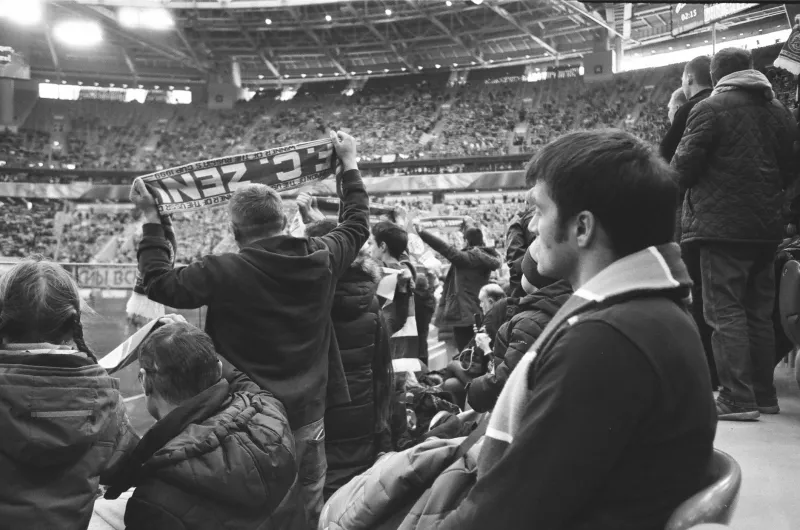
There's a version of Portland Timbers history that gets told a lot. It starts with the MLS announcement, cuts to a sold-out Providence Park, and lands on the Timbers Army in full roar — scarves raised, smoke billowing, the whole cinematic package. It's a great story. But it skips about 30 years of something quieter, grittier, and honestly, a lot more interesting.
Because before any of that happened, there were regular people — teachers, warehouse workers, students, immigrants — who showed up week after week to watch lower-division soccer in a half-empty stadium. They didn't have a viral moment to point to. They just had each other, a love for the game, and a stubbornness that, in hindsight, changed everything.
The Lean Years Nobody Likes to Talk About
The original Portland Timbers played in the North American Soccer League from 1975 to 1982. Those were the flashy years — Giorgio Chinaglia, Pelé rolling through on the Cosmos, the whole NASL circus. But when that league collapsed, Portland's soccer scene didn't disappear. It just got real quiet.
Through the late '80s and most of the '90s, the Timbers bounced around lower divisions — the Western Soccer Alliance, the American Professional Soccer League, the A-League. Crowds were thin. Coverage was minimal. Most Portlanders had no idea the team even existed. And yet, every Saturday, a core group of fans showed up anyway.
These weren't casual supporters waiting for the sport to become cool. These were people who genuinely loved soccer at a time when that wasn't exactly a mainstream American identity. Many of them had grown up playing the game, or had moved to Portland from countries where soccer was religion. They brought their traditions with them — the chants, the standing sections, the sense that watching a match was a communal act, not just passive entertainment.
The Organizers Who Made It Mean Something
At some point in the mid-to-late '90s, something started to shift. A loose collection of supporters began to get more intentional about what they were building. They weren't just showing up — they were coordinating. Spreading the word. Recruiting friends. Arguing about what a proper supporters section should look like and, more importantly, what it should stand for.
The early organizing was scrappy in the best possible way. Think photocopied flyers, word-of-mouth networks, and a lot of conversations at local bars about what European supporter culture could look like transplanted to the Pacific Northwest. People were genuinely figuring it out in real time.
What emerged from all that back-and-forth was a philosophy: the supporters section should be loud, independent, community-driven, and politically conscious. It shouldn't just exist to cheer — it should have an identity. That idea, radical as it might have seemed at the time, became the DNA of what would eventually become the Timbers Army.
Section 8 and the Seeds of Something Bigger
For longtime Portland soccer heads, Section 8 is more than a seating designation — it's shorthand for an era. It's where the early organized supporter culture took root, where chants got refined and tifo culture started to take shape, where the social bonds were formed that would hold the whole thing together through years of uncertainty.
The people who occupied that section weren't doing it for Instagram. There was no Instagram. They were doing it because they believed, maybe irrationally, that Portland could be a real soccer city — that if they built the culture authentically enough, the rest would follow.
And the thing is, they were right. Just not right away.
What Kept Them Going
Ask any of the old-timers what kept them coming back during the lean years, and you'll get different answers. Some will talk about the game itself — the tactics, the artistry, the way soccer demands a different kind of attention than American sports. Others will talk about community. The pre-MLS Timbers crowd was small enough that you genuinely knew the people around you. There was a sense of shared ownership that's harder to maintain when your fanbase grows tenfold overnight.
A few will be honest about the stubbornness factor. Portland has always had a streak of civic pride that borders on the defiant. The idea that soccer didn't belong here, that it couldn't work, that Americans just weren't built for it — that kind of dismissal has a way of motivating a certain type of person. For the diehards, every sparse crowd was a challenge, not a defeat.
The Moment Everything Changed
When MLS awarded Portland an expansion slot in 2009 — with the team set to begin play in 2011 — the reaction from the existing supporter community was complicated. There was genuine excitement, obviously. But there was also a kind of protective instinct. These fans had spent years building something fragile and specific, and now a massive influx of new supporters was about to arrive.
The challenge wasn't just growing the fanbase. It was passing on the culture without diluting it. The Timbers Army, by that point a formalized and genuinely influential organization, took that responsibility seriously. They created onboarding experiences, published guides to supporter culture, and worked to make sure new fans understood that they were joining something with history — not just buying tickets to a new entertainment product.
That effort, largely invisible to the casual observer, is one of the main reasons Portland's supporter culture has stayed coherent even as the club's profile exploded.
The Unsung Legacy
Here's what doesn't get said enough: the people who built Portland's soccer culture from the ground up didn't do it because they knew MLS was coming. They did it because they loved the game and loved their city, and they were willing to invest in something that might never pay off in any conventional sense.
They weren't building a brand. They were building a community. And communities, when they're built right, have a way of outlasting any single moment of success.
The next time you're at Providence Park — scarves up, voice gone, surrounded by 25,000 people who are all in it together — take a second to think about the folks who were doing a version of this in a half-empty stadium thirty years ago. They didn't get the sold-out crowds or the national TV coverage. They got something rarer: the knowledge that they started something real.
That's the story worth telling. And Portland soccer is richer for it.